
Community Event Entertainment Ideas That Work
A community event can have great food, a beautiful venue and plenty of local support, yet still feel flat if there is nothing drawing people together. The best community event entertainment ideas do more than fill a timetable. They create energy at arrival, give families a reason to stay longer and leave people talking positively about the day.
For organisers, the challenge is finding entertainment that suits a mixed crowd without creating extra coordination work. A school fundraiser, council celebration, market day or local festival may bring toddlers, teenagers, parents, volunteers and older residents into the same space. The answer is rarely one big attraction. It is a well-paced entertainment plan that gives every guest a moment to enjoy.
Start with the atmosphere you want to create
Before booking a performer or hiring equipment, decide how guests should feel at different points of the event. A relaxed community market needs a different soundtrack and activity mix from an evening street festival or an awards presentation. Entertainment works best when it supports the event’s purpose rather than competing with it.
For a daytime family event, think upbeat, welcoming and easy to join. Background music can make stalls and food areas feel active, while short interactive moments bring people toward a central area without stopping the whole event. For an evening celebration, stronger lighting, a confident MC and a dance-friendly music program can build anticipation as daylight fades.
It also helps to identify your main audience. If families are the priority, entertainment should be visible, safe and flexible around naps, meals and short attention spans. If the event is designed to celebrate local volunteers or raise funds, include moments that recognise the people behind the occasion. Guests support an event more readily when they feel part of it.
Community event entertainment ideas for mixed crowds
The most dependable approach combines a few entertainment types: something people can hear, something they can watch and something they can actively do. This keeps the experience moving without relying on one act to hold every guest’s attention all day.
A DJ and MC who can read the room
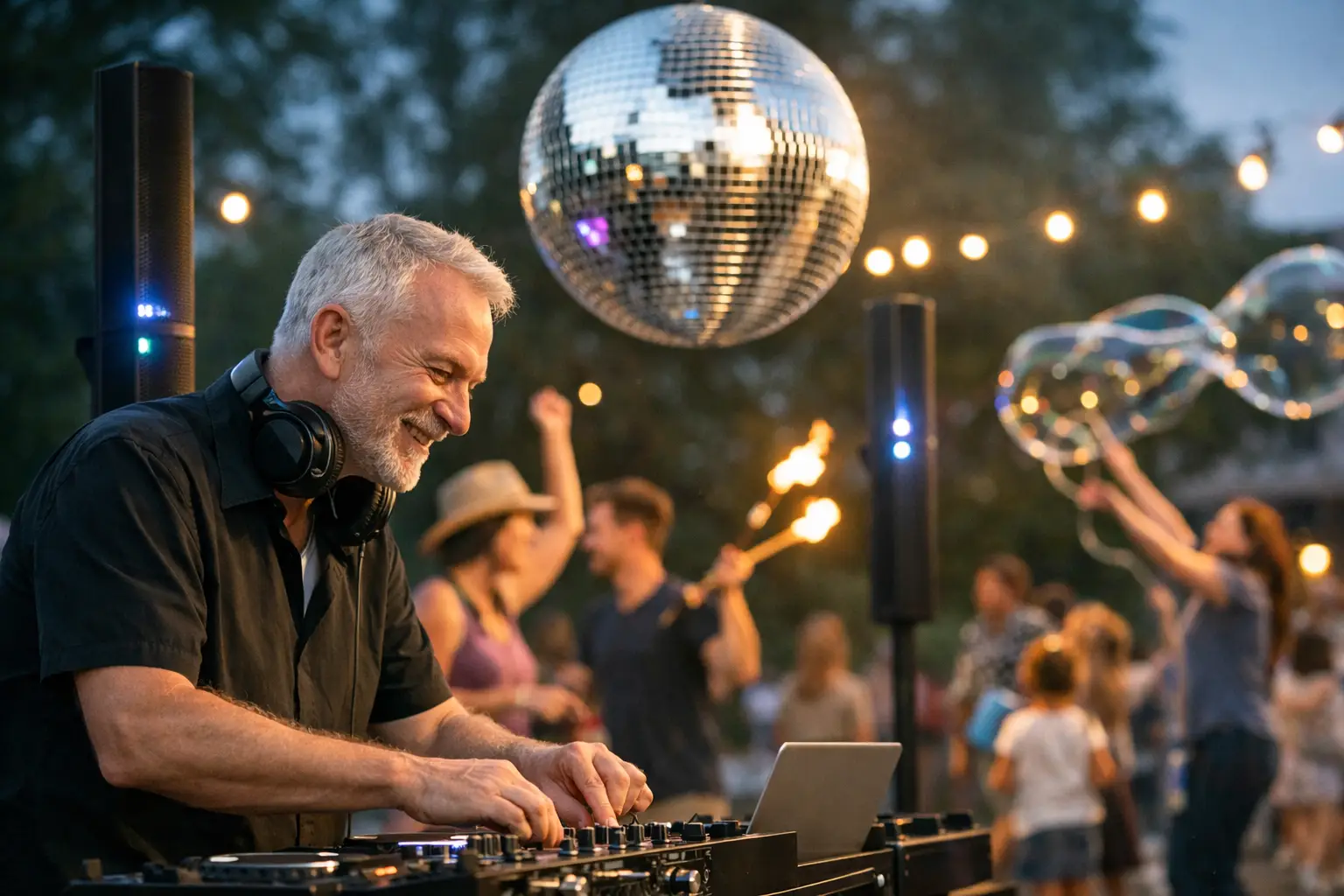
A professional DJ brings far more than a playlist. They can set the tone from the first arrival, make clear announcements, introduce local performers and adjust the music as the crowd changes. At a community event, this flexibility matters. The music needed while people browse stalls is not the music that will encourage guests to gather for a raffle draw or stay for the closing dance set.
An experienced MC also gives the program structure. They can acknowledge sponsors, direct guests to activities, keep presentations on time and make announcements audible without sounding overbearing. That is especially valuable where volunteers are managing multiple jobs at once.
Ask for a music plan that considers the full age range, clean lyrics and local preferences. A good DJ should welcome your must-play songs and also know when to lower the volume so conversations, food service and fundraising can continue comfortably.
Photo booth experiences that create their own buzz
A photo booth is a practical choice for events where guests come and go throughout the day. It gives families, friendship groups and colleagues an activity that requires no special skill, and the photos become a reminder of the occasion long after pack-down.
For community celebrations, choose props and backdrops that match the theme without making the experience too narrow. A heritage day might suit vintage-inspired details, while a sporting club presentation could feature team colours and celebratory signs. Position the booth close enough to the action to be noticed, but away from queue bottlenecks, speakers and food lines.
There is a trade-off to consider. A booth draws guests into a smaller area, which is excellent for engagement but may need active queue management at peak times. Allocate space, provide clear access and make sure it is covered if the event is outdoors.
Local talent with a strong running order
Community events are an ideal platform for local musicians, dance schools, choirs and cultural groups. Featuring local talent helps the event feel genuinely connected to its place, while performers often bring their own supporters along.
The key is production quality. A great singer can lose an audience if the microphone crackles, backing tracks cannot be heard or changeovers drag on. Build a realistic running order with sound checks, set lengths and transition music between acts. Shorter sets often work better at busy public events because guests can enjoy a performance without feeling they have missed everything else.
If you are booking several acts, one sound provider should coordinate microphones, music inputs and stage announcements. This reduces handovers between suppliers and protects the event schedule.
Interactive games and hosted challenges
Hosted games are excellent for turning passive guests into participants. They work particularly well during slower periods, before a headline performance or when you need to pull attention to a central stage.
Consider activities such as:
- family trivia based on local history, pop culture or the event theme
- a dance-off with age-appropriate categories and small prizes
- team challenges for workplaces, sporting clubs or school groups
- a best-dressed parade for themed events
- raffle draws and sponsor giveaways presented with energy
Keep games short, clear and optional. Nobody wants to feel singled out by an MC, but many people will happily join once they see the tone is friendly. Prizes do not need to be expensive. Vouchers from local businesses, event merchandise or donated hampers can be enough to lift participation.
Lighting that changes the event after dark
Lighting is often underestimated until the sun goes down and a lively event suddenly feels unfinished. Thoughtful lighting makes the stage visible, highlights key areas and gives guests a reason to remain for the evening program.
For a community hall, coloured wash lighting can add warmth to plain walls and create a more festive atmosphere. For outdoor events, practical path lighting and clearly lit entry points are equally important for safety. Dance-floor lighting can be a strong addition when the program shifts from performances to socialising, but it should suit the venue and audience. A family event may need bright, playful colour rather than an intense nightclub effect.
Plan the entertainment around the event flow
Entertainment is most effective when it follows the natural rhythm of the day. Start with welcoming music as stalls open or guests arrive. Schedule performances once people have had time to settle in. Use an MC-led activity to regain attention before key announcements, then finish with a memorable final moment such as a community dance, headline act or prize draw.
Avoid stacking major attractions at the same time. If the face painter, food trucks, local band and raffle draw all peak at 1 pm, guests will be forced to choose and each activity loses impact. Spread the program across the event so there is always a reason to stay for another half hour.
Weather also deserves a real contingency plan in Tasmania. Outdoor entertainment may need covered equipment, protected power access and an alternative location if wind or rain arrives. Discuss these details before the day, not while volunteers are scrambling for tarps.
Get the technical basics right
Even the most exciting entertainment ideas depend on reliable sound, power and site planning. Check whether your venue has suitable power outlets, where cables will run and how speakers can be positioned without blocking walkways. Outdoor events may require equipment that projects clearly across an open area without disturbing nearby residents more than necessary.
A site visit is worthwhile for larger events. It allows the entertainment team to assess access for loading, stage position, speaker placement, lighting requirements and wet-weather options. It can also reveal simple issues, such as a noisy generator beside the performance area or a low ceiling that affects lighting design.
Using a one-stop entertainment provider can make this easier. AAA Mobile DJ Services can coordinate DJ entertainment, MC hosting, photo booth experiences, sound support and lighting as one tailored package, reducing the number of suppliers your committee needs to manage.
Give people a reason to remember the final hour
The finish matters. A quiet, unplanned ending can make even a successful event feel as though it simply ran out of time. Let guests know what is still ahead, whether that is the major raffle, the final local act or a group dance that brings the crowd together.
Choose entertainment that reflects your community, then give it the technical support and confident hosting it deserves. When the music, announcements, lighting and activities are working in step, organisers can spend less time troubleshooting and more time seeing their guests enjoy the occasion.