Do DJs Provide Sound Equipment for Events?
When you book a DJ for a wedding reception, gala or big birthday, the music is only one part of the job. The real question is: do DJs provide sound equipment that is suitable for your venue, guest numbers and run sheet? Often, yes. But the level of equipment, technical support and event coverage can vary dramatically between providers.
A professional mobile DJ should be able to supply a sound system built for the occasion, then set it up, test it and operate it throughout the event. That may include speakers, a DJ console, microphones and cabling. For ceremonies, corporate presentations and larger functions, it can also involve separate audio zones, wireless microphones, battery-powered speakers, lectern audio and coordination with venue staff.
The key is not simply asking whether equipment is included. Ask what equipment is included, where it will be used and who is responsible for making it work when the room is full of people.
Do DJs provide sound equipment as standard?
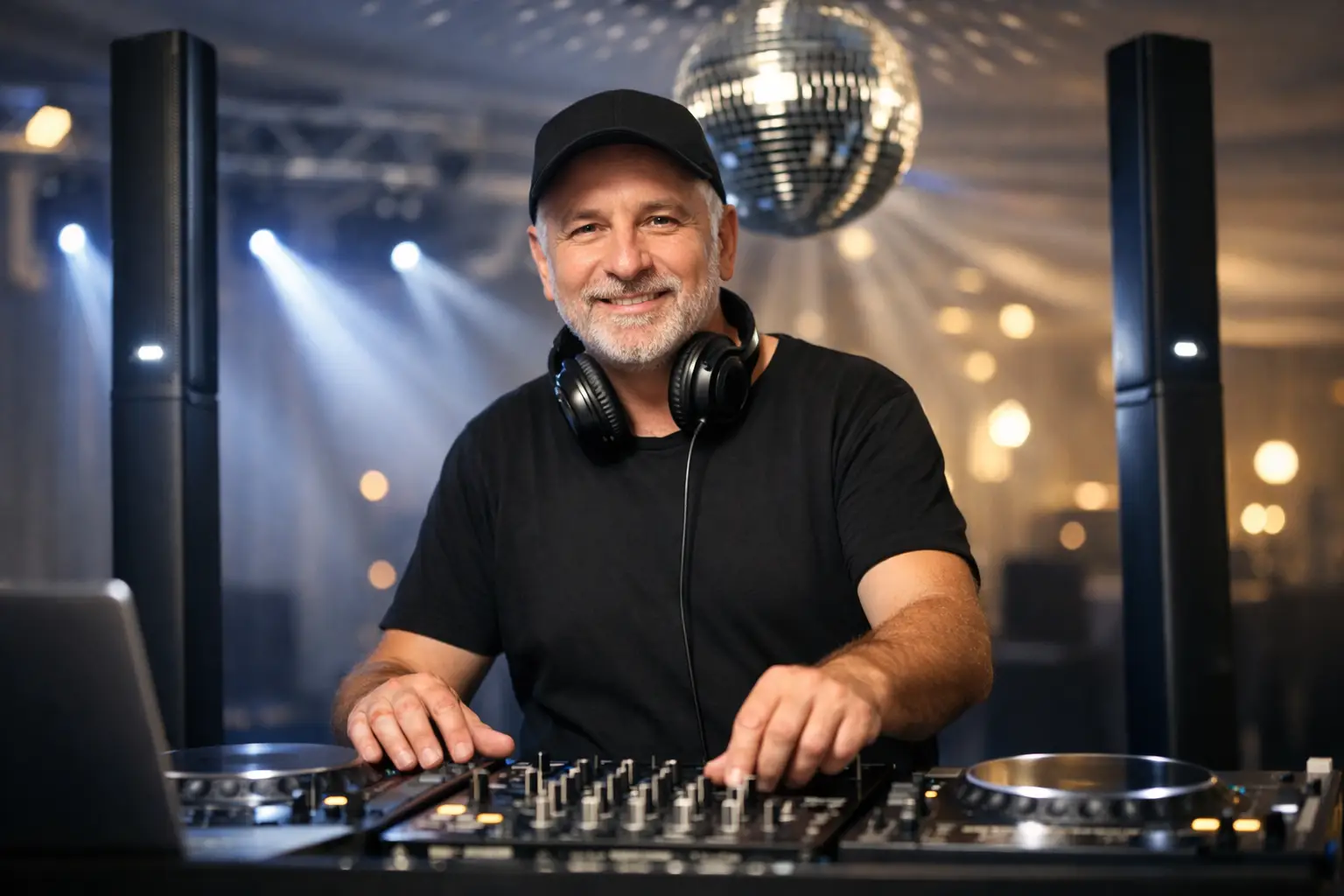
Most established mobile DJs provide their core DJ sound equipment as part of a standard booking. This commonly covers speakers sized for the dancefloor or main function room, a DJ controller or decks, a mixer, music playback equipment and the cables required to run it safely. The DJ will usually arrive early enough to set up and complete a soundcheck before guests arrive.
That standard setup is generally designed for music and dancing. It may be perfectly suited to a 50-person birthday in a private venue, yet not cover a ceremony in one location, canapés in another and a 150-guest reception in a separate room. Likewise, a system that sounds great inside may not be appropriate for a windswept outdoor ceremony or a community event on a large oval.
Professional DJs do not treat every booking as a one-speaker job. They assess the room, crowd size, layout, power access, venue rules and the moments where clear audio matters most. At a wedding, that could mean ensuring every guest can hear the vows, speeches and formal announcements, not just the songs after dinner.
Core DJ equipment versus full event audio
There is a useful distinction between a DJ bringing their normal performance rig and supplying complete sound support for an event. Core DJ equipment is about playing music well. Full event audio is about making the entire event run smoothly.
For example, a corporate awards night may need background music as guests enter, a cordless microphone for the MC, a lectern microphone for presenters, walk-up music, stings for award winners and speakers positioned so tables at the back can hear every announcement. A DJ who also understands sound production can plan this as one coordinated service rather than leaving you to hire audio equipment and troubleshoot it separately.
At AAA Mobile DJ Services, that complete-event approach is particularly valuable for clients who want music, MC hosting, lighting and sound support handled by one experienced team. It removes the guesswork around which supplier owns which part of the event.
What sound equipment might a DJ supply?
The right package depends on your event. A capable DJ may supply a combination of the following equipment:
- Professional speakers and subwoofers for clear music and balanced sound
- DJ decks or controller, mixer, laptop or other music playback system
- Wireless handheld microphones for speeches, toasts and audience interaction
- Lapel or headset microphones for celebrants, presenters and performers
- Speaker stands, cabling, power distribution and safety covers where needed
- Separate systems for ceremonies, cocktail areas, receptions or breakout spaces
- PA equipment for larger crowds, outdoor events and community functions
Not every event needs every item. A small engagement party may only require a well-matched pair of speakers and one microphone. A wedding can require separate audio for the ceremony and reception, particularly when they are held in different locations. For a festival or public event, the system may need to be scaled up considerably, with additional speakers, monitoring and technical planning.
More equipment is not automatically better. Sound that is too powerful for a small room can be harsh and uncomfortable, while an undersized setup struggles to reach guests at the back. The goal is clear, warm audio at the right volume for the venue and occasion.
Questions to ask before you book
The fastest way to avoid surprises is to discuss sound equipment before signing the booking agreement. Give your DJ an accurate guest count, venue details, event timetable and any special moments that need microphones or music cues.
Ask whether the quoted price includes setup and pack-down, and whether the system is suitable for your maximum guest numbers. If you are holding a ceremony and reception in different spaces, confirm whether both areas are covered at the same time or whether equipment needs to be moved between them. Moving gear can work where there is enough time, but it is not a substitute for separate systems when guests are already gathering in the next location.
It is also worth asking how many microphones are included and what type they are. One handheld wireless microphone may be enough for short speeches. Two microphones can be much more practical when an MC needs one while a speaker is ready to go, or when two people are presenting together. For wedding ceremonies, a lapel microphone for the celebrant can make a meaningful difference to guest experience, especially outdoors.
Confirm venue requirements early
Venues often have their own audio conditions. Some have strict sound limits, restricted setup times, limited loading access or preferred positions for speakers. Heritage buildings, waterfront sites and remote Tasmanian locations can also bring practical considerations such as uneven ground, weather exposure and power availability.
Tell your DJ if the venue has an in-house PA, but do not assume that means your audio needs are covered. An installed system may suit speeches but not dance music, or it may be available only in one room. Your DJ should be able to advise whether it is best to use the venue system, bring dedicated equipment or combine both.
Outdoor events deserve extra attention. Wind can affect microphone clarity, rain requires protection for equipment, and generators need to provide stable power. A professional provider will plan for these conditions rather than arriving with a basic setup and hoping for the best.
Why a sound technician’s experience matters
Good sound is rarely noticed. Poor sound is impossible to ignore. Guests remember squealing microphones, speeches they could not hear and music that was either painfully loud or strangely flat. These issues are not just inconvenient – they interrupt the atmosphere you have worked hard to create.
An experienced DJ and certified sound technician knows how to set levels for changing parts of the event, position speakers for coverage without aiming directly at guests, manage feedback and react quickly if a microphone battery fails. They also understand that a packed dancefloor absorbs sound differently from an empty room during setup.
Technical preparation matters just as much as musical judgement. Reliable providers use professional-grade equipment, carry appropriate cables and backup options, and allow sufficient time to test each component. If your DJ is also your MC, their familiarity with the sound system keeps announcements controlled and clear rather than rushed between tracks.
When you may need extra equipment
There are times when a standard DJ package needs an upgrade. Larger guest lists, multiple rooms, outdoor spaces and formal presentations are the most common reasons. If you are planning a wedding ceremony at one end of a property and a reception at the other, separate sound systems can protect the flow of the day. Nobody wants to wait while speakers are packed down and wheeled across the venue just as guests are ready for drinks.
Extra equipment may also be needed when live musicians are performing alongside the DJ, a venue has challenging acoustics or a corporate event includes video playback. In those cases, discuss inputs for instruments, presentation laptops, screens or video sound well before the event date. Audio and visual elements should be tested together, because a great presentation loses impact if its soundtrack cannot be heard.
Lighting, photo booths and effects can also affect where equipment is placed and where power is required. Booking these services through one entertainment provider can make the floor plan and setup process much easier to manage.
Choose clarity, not assumptions
A DJ who provides sound equipment can save you from arranging another supplier, coordinating delivery windows and worrying about technical details on the day. The best outcome comes from a tailored conversation, not a vague promise that “speakers are included”.
Share your vision, your venue and the key moments that matter to you. With the right audio plan in place, your guests can hear the welcome, feel the music and stay focused on celebrating with you.