Tasmanian Wedding DJ Case Study in Action
A packed dancefloor is not created by pressing play at 8 pm. It starts with the right questions before the wedding, carries through clear announcements and well-timed music, and depends on production that suits the room. This Tasmanian wedding DJ case study looks at how a tailored entertainment plan turned a beautiful regional celebration into a night guests were still talking about long after the farewell.
The couple wanted two things that can sometimes pull in different directions: a relaxed, personal wedding for a mixed-age crowd, and a big finish with genuine party energy. They did not want a formal, over-scripted reception. They also did not want to spend their wedding day chasing suppliers, correcting microphone issues or wondering whether the dancefloor would fill.
Their answer was to bring music, MC hosting, lighting and guest engagement under one coordinated entertainment plan.
The brief: relaxed early, high-energy later
The wedding was held at a regional Tasmanian venue with around 90 guests, including close family, long-time friends, workmates and a handful of younger guests ready to celebrate. The room had plenty of charm, but it was a multi-purpose space rather than a dedicated nightclub. That meant the sound and lighting had to lift the atmosphere without overpowering dinner conversations or making the room feel overproduced.
The couple supplied a useful starting point: songs that mattered to them, a few genres they enjoyed and several definite “no” tracks. More importantly, they explained how they wanted people to feel. They wanted the ceremony to be heartfelt, canapés to feel easy and social, dinner to move along without awkward gaps, and the dancefloor to open with confidence rather than hesitation.
That distinction matters. A playlist tells a DJ what a couple likes. A proper event brief explains how the whole room needs to work.
Why one supplier made a difference
Wedding entertainment often becomes fragmented. One person provides music, another hires the speakers, a celebrant has a microphone, a venue staff member makes announcements and someone else arranges lighting. Every individual may be capable, but a handover between separate suppliers is where small delays and mixed messages can creep in.
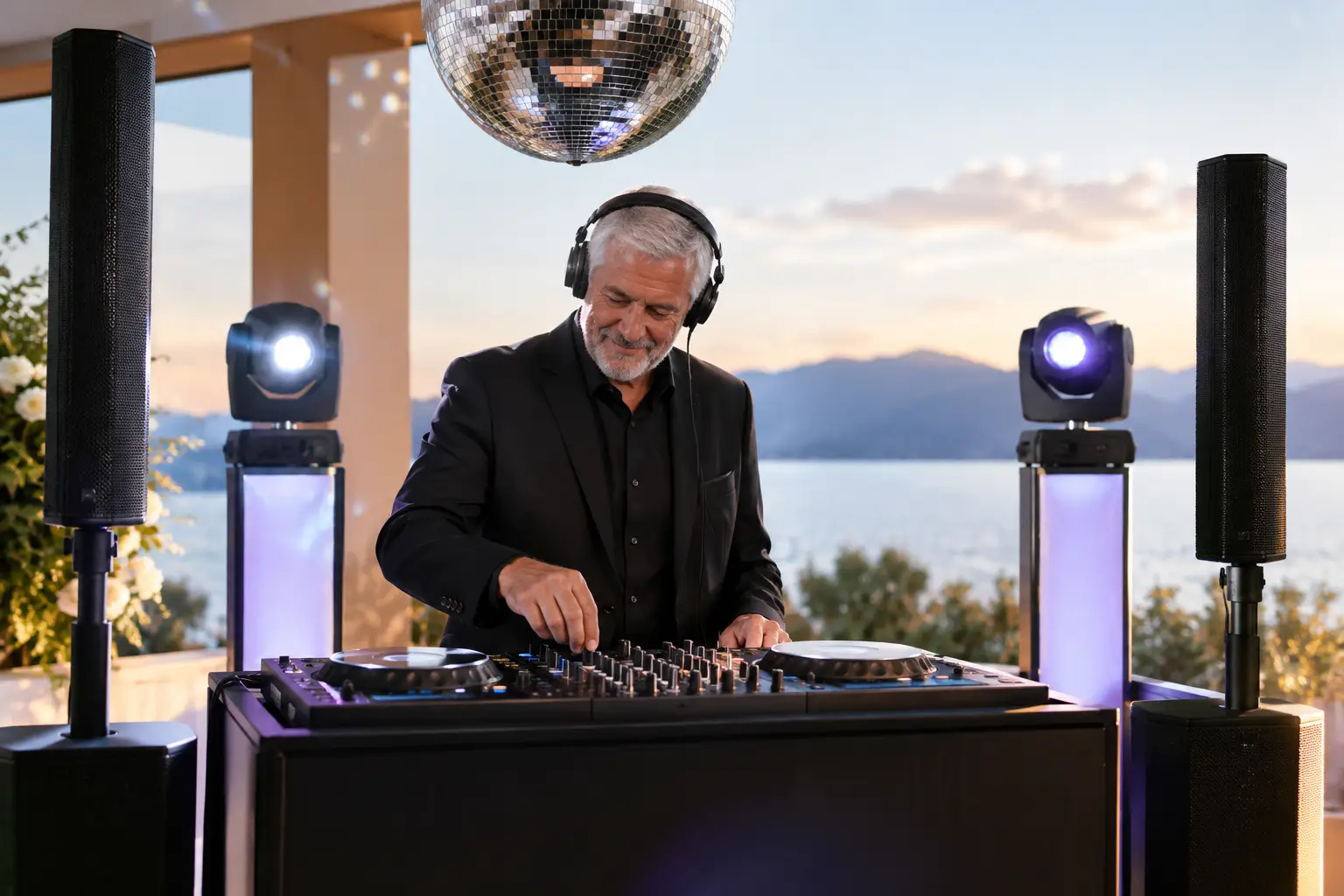
For this reception, the entertainment plan covered DJ performance, professional sound, wireless microphones, MC support, dancefloor lighting and a photo booth experience. The photo booth was positioned to give guests something fun to do during quieter moments, without pulling attention away from the key formalities.
This arrangement did not mean every part of the night had to be loud or flashy. It meant one experienced team understood the running sheet, the room layout and the couple’s priorities from the beginning.
Building the run sheet around real wedding moments
A reception can feel rushed when formalities are treated as interruptions. It can also lose momentum when there is too much waiting between them. The plan for this wedding was built around natural changes in energy.
As guests arrived, the music was warm and upbeat but low enough for reunions and introductions. During dinner, the selections had a little more rhythm while staying in the background. The goal was conversation first, atmosphere second – not a concert during the main meal.
The MC role was equally considered. Brief, confident announcements guided guests to each moment without turning the evening into a constant stream of instructions. The couple’s entrance was introduced with energy, speeches were clearly set up, and guests knew when to gather for the cake cutting and first dance.
A good MC does more than read names from a page. They read the room, protect the schedule and keep the tone aligned with the couple. For a relaxed wedding, that usually means being present when needed and out of the spotlight when not.
The timing trade-off
The couple initially considered fitting speeches, cake cutting, first dance and parent dances into one short block immediately after dinner. It would have been efficient on paper, but it risked making the transition to dancing feel too abrupt.
Instead, the formalities were spaced to give guests room to reset, use the photo booth, visit the bar and catch up. The first dance then had its own moment, followed by a carefully chosen run of songs designed to invite people onto the floor.
There is no single perfect reception schedule. A lunchtime wedding, a 150-person ballroom event and an intimate winter celebration all need different pacing. The right approach depends on the venue, guest mix, catering timeline and how much the couple wants to prioritise dancing.
The turning point: opening the dancefloor
The first few songs after the first dance carry real weight. Play something too niche and guests may stay seated. Go too hard too early and the energy can peak before the night has properly started.
For this couple, the dancefloor opening used familiar, feel-good tracks with a clear beat and broad appeal. The aim was not to force a particular genre. It was to give guests an easy reason to join in. Within the first set, family members, bridal party friends and colleagues were all on the floor together.
That early response gave the DJ useful information. The crowd responded strongly to singalongs, dance classics and current party tracks, while some of the couple’s more alternative favourites worked better in shorter moments rather than extended runs. The playlist stayed true to the couple, but it was adjusted in real time for the people actually in the room.
This is where experience matters. A pre-made playlist cannot see that the grandparents are enjoying the classics, that the bridal party is ready for a throwback, or that guests are starting to drift towards the dancefloor after a particular chorus. A professional DJ is making those decisions all night.
Sound and lighting that supported the room
The technical side of a wedding should not become the centre of attention, but guests notice quickly when it is not right. A microphone that cuts out during speeches, harsh lighting during dinner or music that is too loud for the space can change the mood for the wrong reasons.
For this event, the sound system was sized for the venue rather than simply turned up. Speech microphones were checked before guests arrived, with levels set so speakers could be heard clearly without needing to shout. The DJ setup was positioned to keep cables tidy and allow the entertainment area to feel like part of the room, not an obstacle in it.
Lighting shifted as the night progressed. During formalities, it added warmth and definition around the dancefloor. Once the party began, it became more dynamic, adding colour and movement without blasting guests with distracting effects.
The lesson is simple: more equipment is not always better. The right equipment, professionally managed, is what creates confidence.
What made the experience feel personal
The strongest feedback from this type of wedding is rarely about a single song. Couples and guests remember how the night felt: the entrance that landed perfectly, the laughter during speeches, the photo booth strips taken home by family, and the moment the whole room sang the chorus together.
Personal touches made that possible. The couple’s meaningful songs were woven into the night rather than played in a rigid order. Their must-not-play list was respected. The MC wording reflected their style, and the music moved across decades so no part of the guest list felt forgotten.
That balance is especially valuable at Tasmanian weddings, where guest lists often include several generations, travelling family and close local communities. The best celebration does not split the room into separate groups. It gives everyone a reason to be part of it.
The result: less coordination, more celebration
By the end of the night, the reception had moved from calm and intimate to energetic and inclusive without feeling forced. Guests had clear guidance when it mattered, plenty of freedom in between, and multiple ways to enjoy themselves beyond the dancefloor.
For the couple, the biggest benefit was not having to manage entertainment suppliers on the day. They had one point of contact, one coordinated plan and an experienced team focused on delivering the atmosphere they had pictured. AAA Mobile DJ Services brings that same practical, crowd-focused approach to weddings across Tasmania, whether the brief calls for understated elegance, a full party floor or something in between.
When you are planning your own reception, start with the feeling you want guests to take home. The songs, lighting, announcements and timing can then be shaped around that one clear goal – giving you more time to enjoy the celebration you have worked so hard to create.