7 Top Gala Entertainment Formats That Work
A gala can look exceptional on paper – a beautiful venue, generous sponsors, a strong guest list and a worthwhile cause – yet still feel flat if the room has no energy. The best top gala entertainment formats do more than fill gaps between courses. They build anticipation, keep formal moments moving and give guests a reason to stay engaged long after dessert is served.
For a charity ball, awards evening or corporate celebration, entertainment needs to match the purpose of the night. It should support speeches, fundraising and recognition without competing with them. The right format also considers the guest mix, venue acoustics, run sheet and the mood you want people to take home.
What makes gala entertainment work?
Gala entertainment is not simply about booking a performer. It is about managing atmosphere across an entire evening. Guests often arrive from work, may not know many people in the room, and need a little encouragement before they are ready to hit the dance floor or bid generously in an auction.
A well-planned entertainment package creates clear shifts in energy. Arrival music makes the first impression. Confident hosting gives the programme structure. Lighting changes signal when it is time to focus, celebrate or dance. By the end of the evening, guests should feel they attended an occasion rather than another sit-down dinner.
The format that works best depends on whether your gala is fundraising-led, awards-focused or primarily a social celebration. A black-tie ball with a mature corporate audience may need a more polished, gradual build than a staff awards night where the brief is to celebrate loudly and let people relax.
The top gala entertainment formats to consider
1. DJ and professional MC hosting
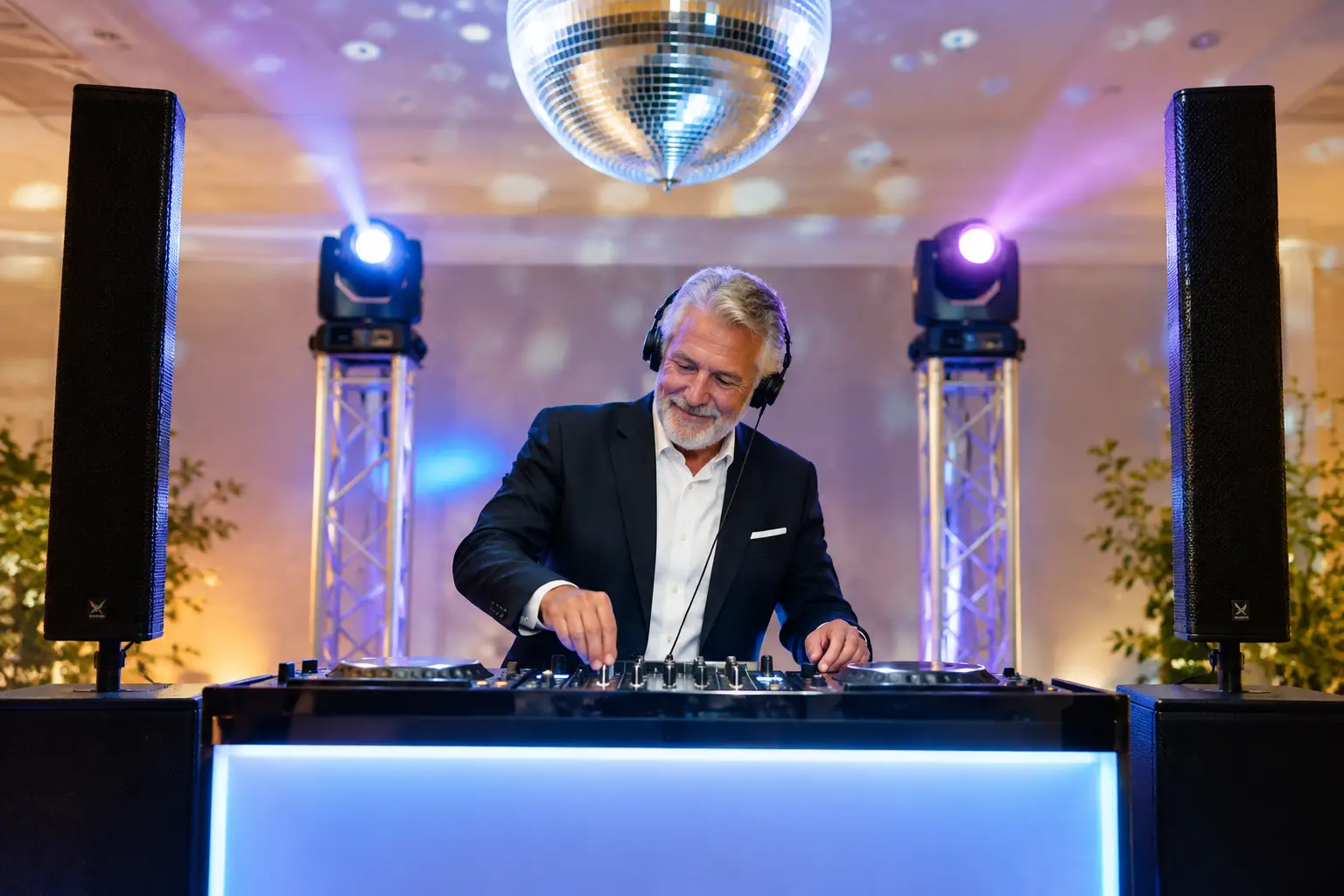
A DJ and MC combination is one of the most flexible choices for a gala because it handles the whole evening, not only the final hour. During guest arrival and dinner, music can be stylish and unobtrusive. When awards, raffles or speeches begin, the MC keeps transitions clear, introduces presenters and helps the room stay focused.
Later, the music can lift naturally into a dance-floor set built around the audience in front of you. This is especially valuable when your guests span several age groups. A skilled DJ reads the room and adjusts the mix rather than relying on a fixed playlist that may miss the mark.
It is also a practical one-stop option. With sound, microphones, music and event hosting coordinated together, there is less chance of awkward silences, missed cues or one supplier waiting on another. For many corporate and fundraising committees, that means less planning pressure on the night.
2. Live musician or feature act with DJ support
A live singer, jazz duo, string act or acoustic performer brings a sense of occasion to the arrival period or dinner service. It can be a strong fit for an intimate gala, a heritage venue or an event where conversation is a priority. Live music gives guests something distinctive to enjoy without demanding their full attention.
The trade-off is flexibility. A live act usually works best within a defined set time, while the event itself continues for hours. Pairing a performer with DJ support gives you both the live moment and a reliable soundtrack for arrivals, announcements, breaks and dancing.
If you are featuring a high-energy act, protect the programme around it. Avoid placing a major auction or lengthy speech immediately after a show-stopping performance, when guests are likely to be talking and riding the buzz. Use that energy deliberately, perhaps to open the dance floor or launch a fundraising push.
3. Awards-night production and walk-up music
For an awards gala, presentation is part of the entertainment. Short walk-up music for every winner, clear microphone levels, carefully timed stings and well-lit stage areas make recognition feel deserved and professional. These details also keep the programme moving, which matters when there are many categories.
A strong MC can bring warmth and pace to award presentations without turning the night into a drawn-out script. They can acknowledge sponsors, reset the room after emotional acceptance speeches and invite applause at the right moments. The aim is celebratory, not overproduced.
This format benefits from a technical run-through before guests arrive. Confirm presenter names, pronunciation, award order, handover points and any video or audio cues. A sound technician who understands live event flow can prevent small technical issues from becoming a distraction in a room full of colleagues, clients and sponsors.
4. Interactive fundraising moments
At a charity gala, guest participation can be more valuable than passive entertainment. A well-hosted silent auction, live auction, raffle draw or donation moment gives people a direct role in the night’s success. The key is timing and confidence.
Build participation after guests have settled in, but before the room becomes tired. An MC can explain the cause clearly, create excitement around prizes and keep the process moving without pressuring guests. Music and lighting can raise the energy around a live auction, especially when a major item reaches its final bids.
Do not overload the evening with asks. If you run a raffle, silent auction, table donations and a live auction, each needs a clear purpose and place in the run sheet. Too many interruptions can make guests feel they are attending a sales pitch rather than a celebration of the cause.
5. Photo booth experiences
A photo booth gives guests something to do between formalities and produces a keepsake they can take home or share with colleagues. It is particularly effective at corporate balls where attendees may be meeting outside their usual teams, or at community galas where guests want a fun group photo without needing to organise it themselves.
For the best result, position the booth away from the main dining space and speaker sightlines. Guests need to be able to use it without creating noise or congestion near the stage. Props can suit the event theme, but keep them polished for black-tie functions. A few well-chosen options usually work better than a cluttered pile of novelty items.
A booth is not a replacement for a dance floor or host. It is an additional engagement point that works well during arrivals, dinner breaks and the first part of the dancing.
6. Lighting-led room transformation
Lighting is often the difference between a functional venue and a gala setting. Uplighting can add colour to walls and architectural features, while a focused stage wash helps speakers and award winners look visible and confident. Once formalities are complete, dance-floor lighting signals a genuine change in the night.
Choose colours that suit your theme, brand or charity identity, but avoid making the room overly bright during dinner. Guests still need to read menus, see their table companions and feel comfortable. For presentations, clean white light on the stage is generally more useful than coloured effects.
Lighting becomes even more valuable in venues with plain walls, high ceilings or limited built-in ambience. It can also help define distinct areas, such as the entry, stage, photo booth and dance floor, without adding bulky décor.
7. The after-party dance-floor format
Many gala organisers concentrate so hard on the formal programme that they leave the final two hours as an afterthought. Yet this is often when guests decide whether the event was merely good or genuinely memorable. An energetic dance floor gives people time to connect, celebrate award wins and enjoy the effort that went into dressing up for the night.
Plan the transition. As dessert is cleared or the final award is announced, bring up the music, change the lighting and have the MC invite guests forward with purpose. The first few songs matter. Familiar, upbeat selections usually bring people in faster than a slow or overly niche opening choice.
A DJ should still work to the room. A corporate gala may call for classics, current party tracks and singalongs, while a younger fundraising crowd may respond to more contemporary dance music. Guest requests can be welcome, but the overall music direction should support the event rather than follow every request blindly.
Build the format around your run sheet
The most successful gala entertainment plan starts with a realistic programme, not a list of add-ons. Allow time for late arrivals, meal service, sponsor acknowledgements, speeches, auctions and award presentations. Then decide where music, hosting, lighting and guest experiences will add value.
It is worth appointing one person to make final timing calls on the night. They should be able to communicate with the venue, event organiser and entertainment team if dinner runs late or a speaker needs more time. A flexible entertainment provider can adjust, but they need clear direction to protect the flow of the evening.
For Tasmanian galas, this coordinated approach can be particularly helpful when events are held in regional venues with varying access, room layouts and in-house equipment. AAA Mobile DJ Services can bring DJ entertainment, MC hosting, lighting, sound support and photo booth experiences together in a package shaped around the event rather than a generic set list.
The strongest choice is the one that makes guests feel looked after from their first drink to their last dance. Give your gala a clear rhythm, leave room for the unexpected and choose entertainment that makes every important moment feel like it belongs.