DJ Versus Playlist: What Your Event Needs
The DJ versus playlist decision often looks simple until the big moments start arriving: guests enter the room, dinner needs to begin, speeches run long, or the dance floor needs a lift. Music is only one part of the choice. The real question is whether you need background sound or a professional who can read the room, manage timing and keep the celebration moving.
For a relaxed backyard birthday with a small group, a carefully prepared playlist may be all you need. For a wedding, corporate gala, engagement party or community function where guest experience matters, a DJ brings far more than a collection of songs.
DJ versus playlist: the real difference
A playlist plays what was selected beforehand, in the order it was selected. That can work beautifully when the event has a predictable schedule, quality speakers and no need for announcements, formalities or changes on the night.
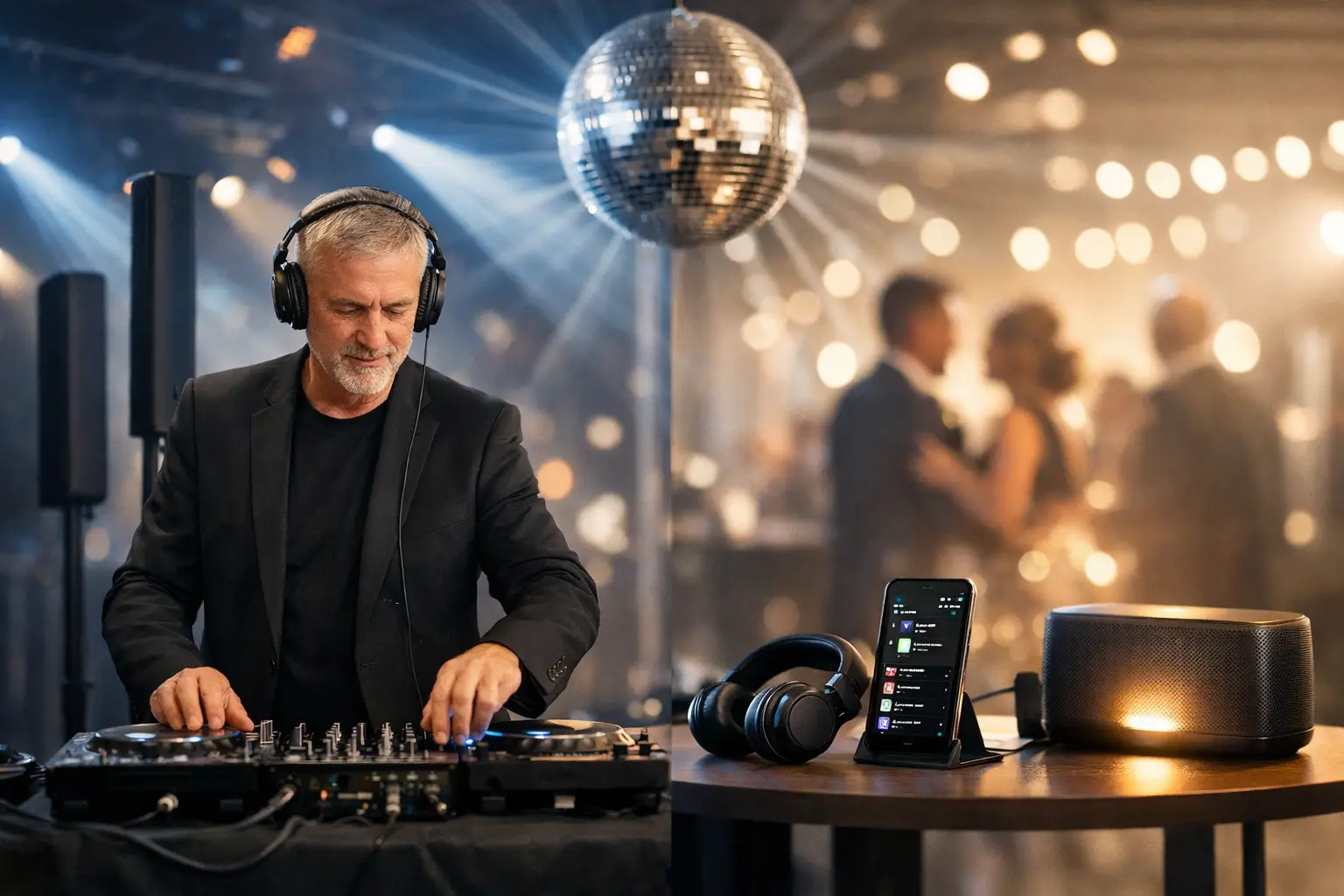
A professional DJ responds to what is actually happening. If the dance floor fills when a particular era, genre or artist comes on, they can build on that energy. If a song clears the floor, they can change direction straight away. If the bride and groom are delayed for photos, the MC needs an introduction or the venue asks for a volume adjustment, an experienced DJ handles it without placing another task on the host.
That flexibility is particularly valuable at events with mixed generations. A great night rarely comes from playing only the organiser’s favourites. It comes from knowing when to bring in a singalong classic, when to hold the tempo, when to play a request and when to move on before the mood drops.
A playlist works best in the right setting
There is no reason to hire a DJ for every gathering. A playlist is a practical, budget-friendly option for a casual afternoon barbecue, a low-key dinner or an event where music genuinely sits in the background. It also gives you total control over every track, provided you have the time to build, test and manage it.
The catch is that the playlist still needs someone behind it. Someone must set up the speaker, connect the device, check the volume, charge the mobile or laptop, manage interruptions and deal with any technical issue. At a party, that responsibility often falls to the host, a family member or a friend who would rather be enjoying the occasion.
Playlists can also struggle with atmosphere. A song selection that sounds perfect while planning at home may feel flat in a room full of guests. Streaming can drop out, ads or notifications can interrupt, and a standard home speaker may not carry speech clearly across a venue. These issues do not always ruin an event, but they can create awkward gaps at exactly the wrong time.
What a DJ adds beyond the music
A DJ’s value is most visible when the event has moving parts. At weddings, this may include guest arrival, ceremony audio, canapés, reception entry, speeches, cake cutting, first dance and the party afterwards. Corporate events may need walk-on music, microphone support, award stings, carefully timed presentations and an upbeat finish that suits the brand.
Live crowd reading
Professional DJs pay attention to the dance floor, not just the run sheet. They look for the songs getting guests of different ages involved, the moments when energy begins to fade and the right time to shift from dinner music to party music.
This does not mean ignoring your preferences. A tailored DJ service starts with your must-play songs, favourite styles and clear do-not-play choices. The difference is that those requests become part of a live set shaped around your guests, rather than a fixed queue that cannot react.
Confident MC hosting
Not every event needs an MC, but many benefit from calm, clear hosting. Guests need to know when to find their seats, where to gather, when speeches begin and when it is time to hit the dance floor. Poorly timed or unclear announcements can make a well-planned event feel disjointed.
A DJ who can also MC gives you one experienced point of contact for music and formalities. That makes coordination easier and gives the night a more polished flow, especially when plans change at short notice.
Sound, lighting and technical reliability
Music sounds very different through venue-grade equipment than it does through a portable Bluetooth speaker. A professional setup is matched to the size of the room, guest numbers and type of event. It should provide clear music without overwhelming conversation, along with microphones that make speeches easy to hear.
Lighting matters too. Warm, subtle effects can lift a dinner space, while dance-floor lighting signals that it is time for the party to begin. For a wedding or major celebration, these production details turn a room into an experience rather than simply a function space.
With more than 30 years of experience, AAA Mobile DJ Services can also bring the technical knowledge needed to plan sound, lighting, hosting and entertainment as one coordinated package. That is especially helpful when you do not want to manage separate suppliers on the day.
The hidden cost of doing it yourself
A playlist can look like the cheaper option, and sometimes it is. But compare the full cost, not only the streaming subscription. You may need speaker hire, microphones, lighting, cables, adapters, a backup device and someone confident enough to operate it all. If the venue has strict sound limits, a poor-quality setup can create feedback, distorted audio or frustrated guests.
There is also the cost of your time. Building a playlist for a four-hour event means choosing enough music for arrival, meals, formalities and dancing, while allowing for tracks you may skip. You need to think about clean versions, tempo changes, special requests and the songs that will bring people together.
For some hosts, that preparation is enjoyable. For others, it becomes one more job during an already busy event plan. Hiring a DJ is not just paying for music. It is paying to hand over responsibility and stay present with your guests.
When a DJ is worth the investment
A DJ is usually the stronger choice when the entertainment will affect how people remember the event. Weddings are the clearest example because the day includes both emotional formalities and a party with varied age groups. The right soundtrack can make the first dance feel personal, support heartfelt speeches and keep the celebration going well after dinner.
Corporate events also benefit when there is a need for professional presentation. Clear microphones, controlled sound levels and an MC who can handle awards or introductions reflect well on the organiser. For festivals and community celebrations, experienced sound support and crowd awareness are often essential for safety, timing and enjoyment.
A playlist may be enough for a small, informal occasion. Choose a DJ when you want music to respond to the room, formalities to feel organised and technical details to be handled by someone who does this every weekend.
How to make either choice work
If you choose a playlist, test it in the venue or on similar equipment before the event. Download the music for offline use, turn off notifications, prepare backup power and nominate one person to manage the sound. Keep the music appropriate for your guests and build in longer-than-expected playlists so you are not replaying the same songs late in the night.
If you book a DJ, share your event vision early. Let them know the guest mix, key moments, favourite artists, special songs and any music you would rather avoid. The more clearly you communicate the atmosphere you want – elegant, relaxed, high-energy or somewhere in between – the easier it is to create a soundtrack that feels like yours.
Your guests may not remember every song that played, but they will remember how the event felt. Choose the option that lets you enjoy that feeling too, rather than spending the night watching the speaker or worrying about what plays next.