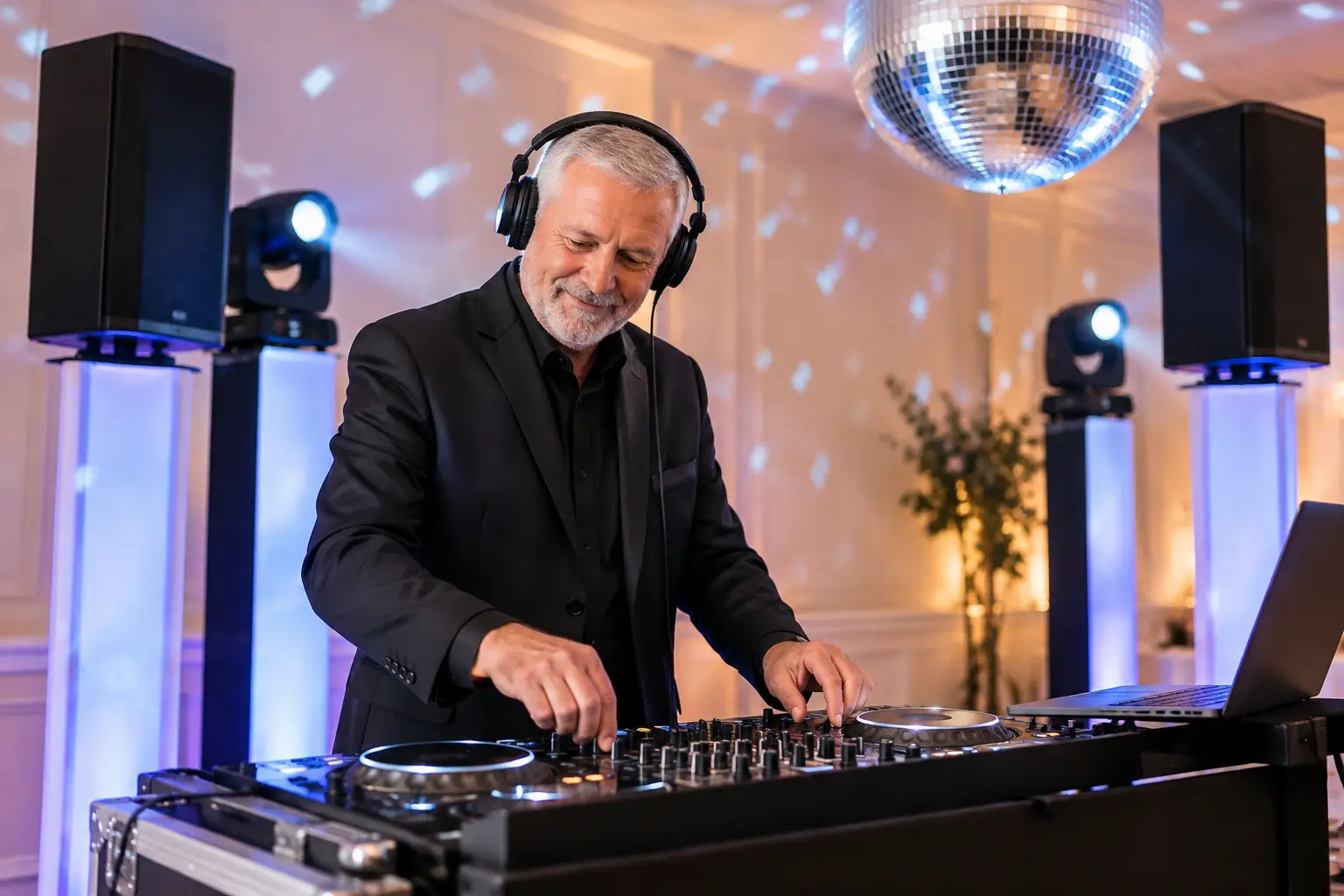

When Should DJ Arrive for a Wedding or Party?
The question of when should DJ arrive can make the difference between a relaxed event opening and a rushed start with guests already at the door. A professional DJ does far more than press play. They need time to unload, set up sound and lighting, test every connection, speak with venue staff and make sure the entertainment is ready before the first important moment happens.
For most events, the right arrival time is based on the setup required, the venue conditions and when guests are due to arrive. The goal is simple: all equipment should be in place, tested and out of sight before your celebration begins.
Why DJ arrival time matters
A mobile DJ setup can include speakers, mixing equipment, microphones, dancefloor lighting, ceremony sound, photo booth equipment and more. Each item needs to be transported safely, positioned correctly and tested in the actual event space. A quick sound check in an empty room is very different from testing a microphone when the room is full of people, table settings and conversation.
Early access also gives your DJ time to solve the small issues that can otherwise create stress. Perhaps the loading area is further away than expected, a power point is unavailable, a speaker position needs to change or the venue has a strict sound limit. These details are manageable when there is time. They become disruptive when guests are waiting.
A reliable entertainment provider will work from an agreed run sheet, but the venue’s access time matters just as much as the event start time. If access is limited, your package and equipment plan may need to be adjusted accordingly.
When should DJ arrive for a wedding?
For a wedding reception, a DJ should generally arrive two to three hours before guests enter the room. This allows enough time to unload, build the setup, complete sound checks and coordinate with the venue coordinator, photographer or wedding planner.
If your DJ is also providing ceremony music and microphones, they may need to arrive much earlier. A ceremony setup often needs to be ready at least 45 to 60 minutes before guests arrive, particularly for outdoor weddings where wind, weather, uneven ground and power access can affect the technical side of the day.
A wedding with separate ceremony and reception locations requires additional planning. The DJ may need two sound systems, a move between sites, or a carefully timed pack-down and reset. In these cases, the best arrival time is not a standard number. It should be planned around travel time, venue access and the moments that cannot be delayed, such as the bride’s entrance, speeches and first dance.
For a straightforward reception in one room, aim for the DJ to be fully set up before the first guests arrive for pre-dinner drinks. This keeps the room looking polished and means background music can welcome everyone from the moment they walk in.
Allow extra time for larger wedding production
More equipment means more setup time. If you have booked uplighting, dancefloor effects, a photo booth, multiple speaker zones, custom monograms or enhanced lighting, allow at least three hours of venue access. A larger ballroom, marquee or regional property may also involve longer distances from the loading point to the event space.
The same applies where a DJ is taking on MC duties. They will want time to confirm name pronunciations, finalise speech order, check key songs and make sure they understand any last-minute changes to the run sheet. That preparation helps the formalities feel confident, warm and well paced.
When should a DJ arrive at other events?
For most birthday parties, engagement parties and smaller private celebrations, allow your DJ to arrive 90 minutes to two hours before guests arrive. This is usually enough for a standard sound and lighting setup, provided the venue is accessible and the equipment can be brought in without delays.
Corporate functions often benefit from an earlier arrival, particularly when microphones are needed for presentations, awards or panel discussions. For a gala, conference dinner or product launch, allow two to three hours before doors open. Corporate event schedules are often tightly timed, and every microphone, walk-on song and lighting cue should be checked well before attendees enter.
Community events, festivals and outdoor functions can require much more lead time. Public events may have site inductions, allocated bump-in windows, traffic restrictions, power requirements and safety procedures. Larger systems may need several hours, especially where the DJ is supporting performers, announcements or a full event program.
Venue access matters more than the clock
A DJ cannot begin setting up until they can access the event space. Before confirming a schedule, check what time the venue allows suppliers to enter and whether there are restrictions around loading, lifts, stairs, parking or noise.
A few practical questions can prevent trouble on the day. Is there a dedicated loading zone? Is the performance area on the ground floor? Are there enough power points nearby? Will the room be reset between a ceremony and reception? Is there a wet-weather plan for an outdoor celebration?
Tasmanian venues are wonderfully varied, from waterfront spaces and heritage buildings to rural properties and marquees. That variety is part of the appeal, but it also means access can differ greatly. A DJ setting up in a Hobart hotel ballroom has different requirements from one delivering entertainment at a country wedding or coastal celebration.
If the DJ must carry equipment over grass, upstairs, through a busy restaurant or across a large property, allow additional time. It is also worth reserving a nearby parking space where possible. Loading speakers and lighting from a distant car park is achievable, but it should not eat into the setup window.
A practical arrival timeline
The best schedule works backwards from guest arrival. If guests enter at 6.00 pm, a standard reception DJ may arrive around 3.00 or 4.00 pm, depending on the package. By 5.30 pm, the equipment should be tested, the room checked and the DJ ready to provide welcome music.
For an event with speeches at 7.00 pm, microphones should not be first tested at 6.55 pm. The DJ should have already confirmed levels, battery backups and speaker coverage while the room is quiet. For a wedding, key tracks for the grand entrance, cake cutting and first dance should also be confirmed before the event begins.
Build in a buffer rather than planning arrival to the minute. Deliveries run late, weather changes and venues occasionally need extra time to turn a room around. A buffer protects your timeline and keeps the entertainment side calm.
What happens if the DJ arrives late?
Even an experienced DJ cannot complete a full production setup instantly. Rushed setup can mean cables are more visible than they should be, lighting is not positioned for the best effect or sound checks are cut short. More importantly, it distracts from the atmosphere you have worked hard to create.
There are situations where a later arrival is unavoidable, such as a venue that cannot grant earlier access. In that case, be upfront with your DJ well before the event. They may be able to bring a simplified setup, arrange a staged bump-in or coordinate with venue staff to make the process more efficient.
The answer is not always to arrive as early as possible. Setting up too early in an unsecured public area can create risks, and some venues need the room clear for other functions. The right approach is an agreed arrival time with enough access to do the job properly.
Confirm the plan before event day
A week or two before your event, confirm the final timing with your DJ and venue. Share the venue contact, loading instructions, floor plan, event schedule and any changes to guest numbers or formalities. If you have special requests, such as a surprise performance, cultural music, a video presentation or a speech from overseas, raise them early.
AAA Mobile DJ Services plans each booking around the event itself, whether that means a simple party setup or complete entertainment delivery with MC hosting, lighting and photo booth experiences. Clear communication before the day allows the team to focus on what guests will remember: great music, confident announcements and a dancefloor with real energy.
Give your DJ enough time to arrive prepared, and your event can begin exactly as it should – with music playing, guests smiling and you free to enjoy the occasion.